


From AI Hype to ROI: How to Build the Observability Foundation for Autonomous Systems
- Apr 10
- 6 min read
The boardroom conversation has shifted. In 2024 and 2025, the focus was on the potential of Generative AI: the "dreaming" phase where every enterprise imagined a future of frictionless operations and self-healing systems. But as we move deeper into 2026, the honeymoon period is over. The pressure has moved from the Chief Innovation Officer to the VP of Engineering and the Operations leads. The question is no longer "What could AI do?" but rather "Why isn't it doing it yet?"
You don’t build a house without planning consent and solid foundations. The same is true for doing AI in production. In our view, planning consent looks like a clear strategic observability roadmap: knowing what you are trying to improve, what decisions AI should support, and where automation can safely add value. Solid foundations mean high-quality, unified data: telemetry you can trust, correlate, and act on in real time.
The reality is unforgiving. Recent industry data suggests that a staggering 95% of generative AI projects fail to achieve their initial ROI targets. The reason isn't a lack of ambition or talent; it is a fundamental implementation gap. Organisations are trying to run billion-dollar AI models on top of fragmented, legacy telemetry. They are trying to put a roof on a house that hasn't been cleared for construction or built on stable ground.
At Visibility Platforms, we believe the transition from AI hype to tangible ROI requires more than just a better model. It requires a radical shift in how we architect our observability foundation. And this is not just an IT or Observability conversation. It is an organisational one. If you want your systems to act autonomously, they first need to see, understand, and reason in real-time, and every layer of the business needs to trust what those systems are doing.
The Unforgiving Gap Between Pilot and Production
Most AI initiatives stall in the "Pilot Purgatory." It’s easy to build a proof of concept (POC) that suggests a smarter way to handle alerts. It is an entirely different challenge to operationalise that AI in a complex, hybrid-cloud environment where the cost of a hallucination isn't a wrong chatbot answer, but a catastrophic system outage.
The "doing" phase of AI requires a move away from reactive monitoring. Traditional monitoring tells you that something is broken. Observability tells you why it is broken. But for autonomous systems, we need a third level: Actionable Context. Without this, AI is just a faster way to generate noise. And if you skip the roadmap and the data layer, you are effectively asking AI to finish a building site that was never properly approved or prepared.
That matters far beyond the platform team. A virtual desktop support agent needs reliable AI assistance they can trust when helping users under pressure. An operations lead needs confidence that automated actions will not create more instability. And at the top of the house, board-level oversight depends on trusting the reporting, trends, and risk signals generated by those same automated systems.
The First Pillar: Unified Data Across Every Domain
You cannot automate what you cannot see with absolute clarity. One of the primary reasons AI projects fail is data fragmentation. When your infrastructure data lives in one tool, your cloud logs in another, and your user experience metrics in a third, your AI models are effectively blind in one eye.
Machine learning models cannot reliably identify patterns across inconsistent, siloed data sets. If your AI doesn't understand that a spike in latency in a microservice is directly correlated to a specific Kubernetes pod restart and a simultaneous internet path fluctuation, it will fail to provide a root cause.
This is the solid foundations piece. If the ground is unstable, nothing you build on top of it will hold for long. To bridge this gap, we must prioritise the consolidation of telemetry. This means moving toward a Unified Data Nexus: a single source of truth where infrastructure, cloud, and internet paths are correlated in real-time. Currently, 84% of leading organisations are consolidating their observability tools for this exact reason. They realise that tool sprawl is the enemy of AI maturity.
In practice, these foundations have to serve every role. The same trusted data that helps an engineer identify a failing dependency also supports frontline teams relying on AI guidance and executives relying on automated reporting. If the foundation is cracked, the risk is not just a technical glitch. It is a failure of trust that travels up the entire business hierarchy.
The Second Pillar: Beyond the Black Box with Explainable AI
For an operations team to trust an autonomous system to take action: such as auto-scaling a cluster or rolling back a faulty deployment: the AI must be explainable.
The era of the "black box" is over. If an AI suggests a remediation, the engineering team needs to see the logic trail. This is where high-quality observability platforms like Dynatrace excel. By providing a visual service call flow and contextual troubleshooting data, these platforms move AI from a "guessing game" to a deterministic engine. In house-building terms, this is the difference between signed-off plans and guesswork on site.
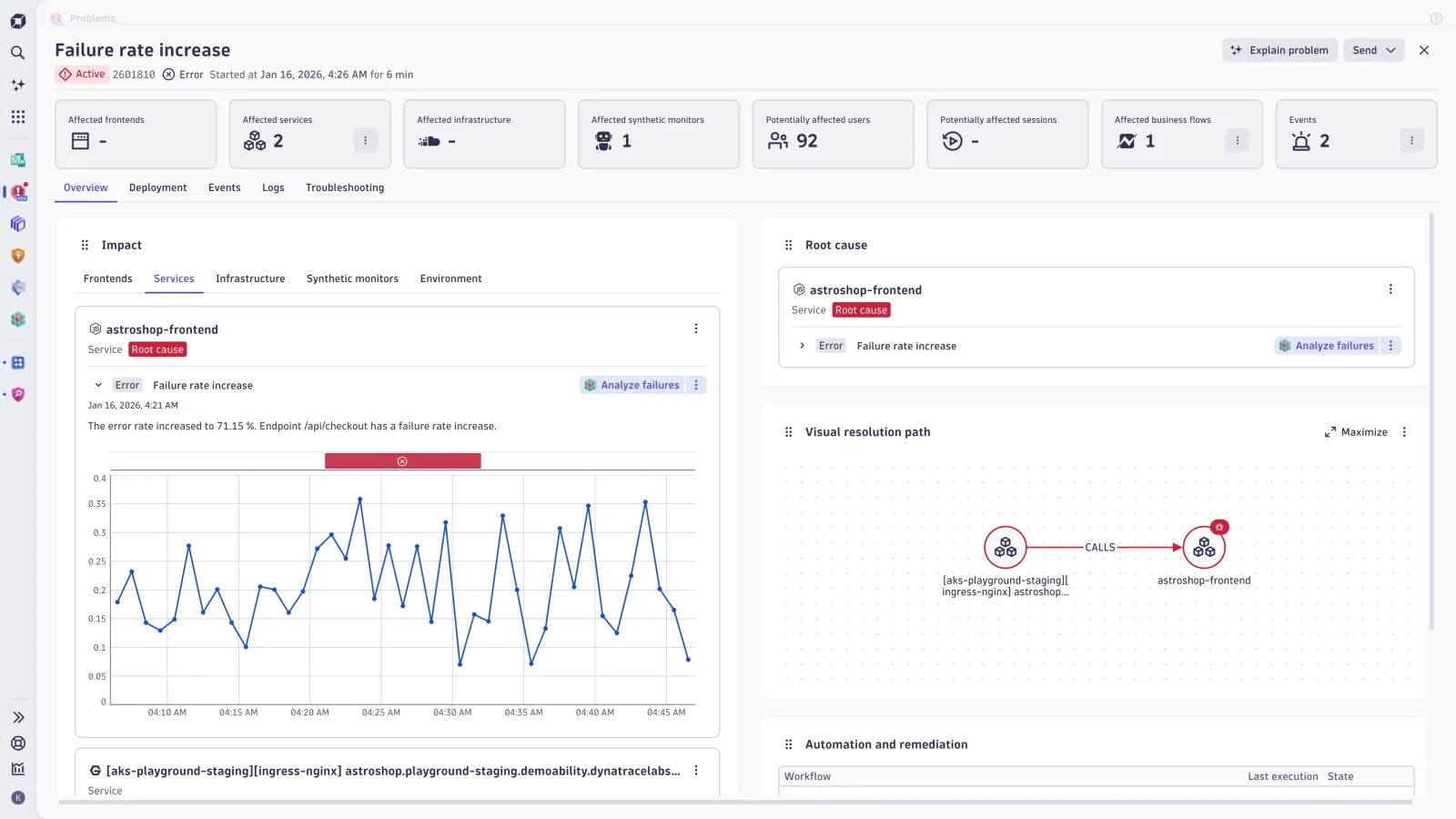
In our view, the most successful autonomous systems follow a strict progression: Visibility → Correlation → Prediction → Action. You cannot skip the first two steps and expect the last two to work. When you have deep, real-time context, your AI can move from simply alerting you to a problem to proactively identifying the exact line of code or the specific configuration change that caused it.
The Third Pillar: Architecting for Agentic Observability
The next frontier isn't just "AI in our tools," but Agentic Observability. This involves AI agents that don't just observe but actively manage the observability pipeline itself. These agents ensure that the right data is being collected at the right time without manual intervention.
However, many organisations find a "missing link" when trying to extend this level of intelligence to the edge. This is why we often highlight the importance of integrating BindPlane with Dynatrace to ensure that even the most remote parts of your architecture are feeding high-quality data into your central AI engine.
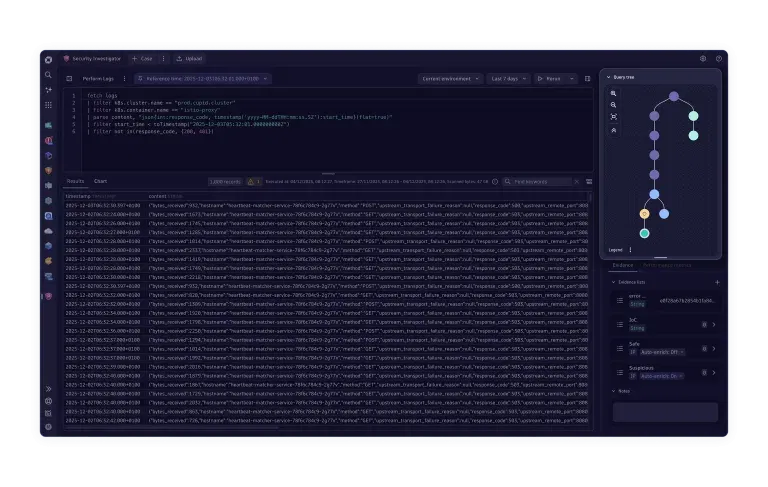
Architectural shifts are required to support this. We are moving away from static dashboards and toward dynamic, query-driven insights. An autonomous system needs to be able to "ask" the data questions in real-time to validate its hypotheses before it takes an action. That only works when the planning consent is in place through a strategic roadmap and the foundations are strong enough to support more automation.
The ROI of "Doing": Why Observability Budgets are Resilient
Despite broader economic pressures and cost-cutting measures, observability budgets remain remarkably resilient. In fact, 96% of organisations are maintaining or increasing their spend. Why? Because observability is the fuel for AI ROI.
When an autonomous system reduces the Mean Time to Resolution (MTTR) from hours to seconds, the financial impact is immediate. It's not just about saving money on "man-hours"; it's about protecting revenue, maintaining customer trust, and allowing your most expensive engineering talent to focus on innovation rather than firefighting.
To get the "lift" from dreaming to doing, we suggest focusing on these practical engineering realities:
Eliminate the Noise: Use AI-driven deduplication to ensure your teams only see alerts that matter.
Standardise on OpenTelemetry: Ensure your data is portable and consistent, making it easier for AI models to digest.
Invest in Context: Remember that observability is storytelling, and every good story needs a clear, data-backed context to make sense.
Leading the Pack: The Path to Operational Maturity
The gap between the leaders and the laggards is widening rapidly. The companies that are winning are those that treat AI as a strategic enabler linked to core business objectives, rather than an experimental pilot. They are building their "Autonomous IT" framework with clear guardrails and human governance.
Can your organisation afford to stay in the dreaming phase? As the landscape becomes more unforgiving, the ability to move with momentum is the only way to survive.

Interestingly, the path to AI success is less about the AI itself and more about the data pipeline that feeds it. By focusing on a solid observability foundation, you aren't just preparing for AI: you are future-proofing your entire digital ecosystem. Skip the groundwork, and the whole structure becomes fragile. Get it right, and you can build with confidence.
That is why this conversation belongs in every part of the organisation. From the service desk to the boardroom, the promise of AI only becomes real when people can trust the systems, the recommendations, and the reporting. Once that trust is damaged, rebuilding it is far harder than fixing a broken workflow.
Stop Dreaming, Start Deploying
At Visibility Platforms, we specialise in helping organisations navigate the messy middle of AI implementation. We don't just talk about the future; we help you build the architectural bedrock needed to reach it.
Whether you are looking to consolidate your toolset, implement Agentic AI, or simply get more value out of your existing Dynatrace environment, our experts are here to bridge the gap between strategy and reality. We help teams define the strategic observability roadmap, strengthen the data foundations, and avoid rushing to the roof before the site is ready.
The future of IT is autonomous. The question is: is your foundation strong enough to support it?
Visibility is the foundation of trust in an autonomous world.
Comments