


Lock the War Room Door: How Dynatrace Automation Lets You Leave the Lights Off
- Mar 23
- 5 min read
Let’s be honest: nobody actually likes the War Room. Despite the cinematic name, there’s nothing heroic about sitting on a bridge at 3:00 AM with twenty other weary engineers, all staring at different dashboards and insisting their specific silo "looks green." It’s a ritual of wasted time, expensive cold pizza, and finger-pointing that should have stayed in the last decade.
In the fast-evolving landscape of 2026, the complexity of modern cloud-native environments has made the traditional "all-hands-on-deck" approach not just inefficient, but dangerous. You cannot scale a human-centric response to a machine-speed problem. If your strategy for uptime still relies on assembling a committee every time a microservice hiccups, you aren't just behind the curve: you’re falling off it.
At Visibility Platforms, we’ve seen enough "unexplained outages" to know that the only way to win is to stop playing the game. It’s time to lock the war room door, turn the lights off in the NOC, and let Dynatrace automation do the heavy lifting.
The Death of "Red-Light, Green-Light" Monitoring
For years, IT teams have been stuck in a cycle of reactive monitoring. We set thresholds, we wait for them to break, and then we scramble. We call this "observability," but often it’s just glorified alerting. The result is a phenomenon we call "sinking in alerts": a state where the sheer volume of noise makes it impossible to find the signal.
The problem is that most tools rely on simple correlation. They tell you that "CPU is high" and "Response time is slow" at the same time. Brilliant. But did the CPU cause the slowness, or is the slowness causing a backup that spikes the CPU? Correlation is just a fancy way of saying two things happened together. It doesn’t tell you why.
This is where Dynatrace changes the narrative. By moving toward outcome-driven observability, we stop obsessing over individual metrics and start focusing on the business impact.

Davis AI: The End of Guesswork
If you want to leave the lights off, you need a brain that doesn't sleep. Enter Davis AI, Dynatrace’s causation-engine. Unlike basic AI that just looks for patterns (and often finds ghosts in the machine), Davis uses deterministic AI to map dependencies in real-time.
When a problem arises, Davis doesn’t just send an alert saying "something is wrong." It performs a root cause analysis in seconds, traversing billions of dependencies to tell you exactly what happened, which users are affected, and: most importantly: what the causation was.
In our view, this is the difference between a "fact-based IT solution" and a "best guess." While your competitors are still navigating the maze of unexplained outages, Dynatrace users are already looking at the solution.
Davis AI provides:
Precise Root Cause: No more "maybe it's the database." It’s "it is exactly this SQL query on this instance."
Impact Assessment: It tells you if 500 customers in London can’t check out, or if it’s just a background task failing silently.
Reduced Noise: It collapses thousands of individual events into a single, actionable "Problem" ticket.
Automation: The "Lights-Off" Strategy
Identifying the problem is only half the battle. If Davis tells you what’s wrong but you still have to wake up a SRE to fix it, you’re still tethered to the war room. The real game-changer is moving from visibility to automated remediation.
Imagine a scenario where a memory leak is detected in a production service. Instead of paging the on-call engineer, Dynatrace triggers an automated workflow. It captures a heap dump for the developers to look at on Monday morning, restarts the affected pods, and updates the Jira ticket. All before a human even touches the keyboard.
This isn't science fiction; it’s the reality of Dynatrace Cloud Automation. By integrating with your CI/CD pipelines and orchestration tools, you can build self-healing infrastructures.
Automated Runbooks: Execute predefined scripts to clear caches, scale resources, or roll back faulty deployments.
Security Gates: Use Dynatrace Grail to automatically assess security vulnerabilities in real-time, blocking bad builds before they ever hit production.
SLO-Driven Actions: If a Service Level Objective is at risk, the system can automatically shift traffic or throttle non-essential background processes to preserve the user experience.

Empowering the Command Centre
When you automate the "boring" stuff: the restarts, the log clearing, the basic troubleshooting: something interesting happens to your team. Your Command Centre (or NOC) stops being a room full of firefighters and starts being a hub for strategic innovation.
Instead of staring at walls of monitors waiting for a spark, your experts can focus on optimising the digital journey. They can look at shorter data journeys with pipelines or deep-dive into monitoring Azure Front Door to squeeze out every millisecond of performance.
Can we do more with less? Absolutely. But it’s not about cutting headcount; it’s about reallocating human intelligence to where it actually adds value. Let the machines handle the 3 AM CPU spikes. Let your people handle the architecture of the future.
Why "Good Enough" Isn't Enough Anymore
The market is unforgiving. We’ve seen the fall of giants who refused to adapt to the cloud-native world. The complexity of hybrid and multi-cloud environments is a stark reminder that manual intervention is a failing strategy.
If you are still managing logs manually, you are likely over-spending on ingest while gaining zero actionable insight. Dynatrace, powered by the Grail data lakehouse, eliminates the "indexing nightmare." It allows you to store everything and query anything without the massive overhead of traditional log management.
Interestingly, many organisations fear that "automation" means losing control. In reality, it’s the opposite. Automation gives you absolute control because it ensures that every response is consistent, documented, and based on hard data rather than human panic.
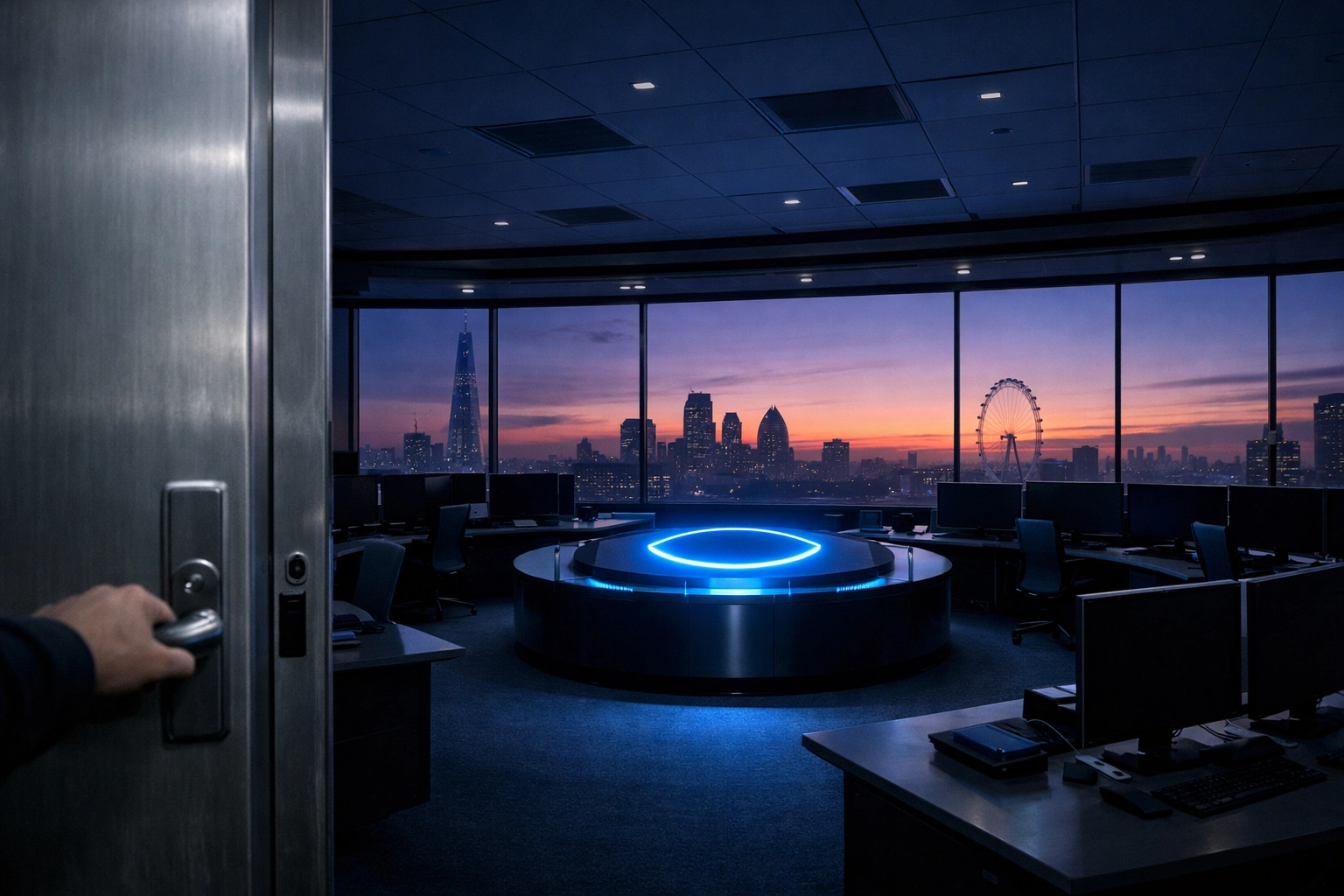
Locking the Door for Good
The goal of modern IT shouldn't be to have the fastest response to a disaster; it should be to prevent the disaster from ever reaching the "War Room" stage.
By leveraging Dynatrace’s causation-based AI and robust remediation workflows, you can transition to a state of proactive prevention. You can "leave the lights off" because the system is designed to sustain itself.
Is your team ready to stop firefighting?
Audit your current "War Room" frequency. If it’s more than once a month, your tooling is failing you.
Move from correlation to causation. Stop guessing and start knowing with Davis AI.
Prioritise automated remediation. Start with one frequent, low-risk issue and automate the fix.
Partner with experts. At Visibility Platforms, we don't just sell tools; we architect outcomes.
The era of the "War Room" is over. It’s time to lock the door, go home, and let the automation take the night shift. You’ve got better things to do than watch a monitor glow in the dark.
Are you ready to see what your business looks like when the lights stay off? We anticipate that the most successful companies of 2026 will be the ones that trust their data enough to stop watching it.
If you're looking to evolve your observability practice from "watching" to "acting," Visibility Platforms is here to guide the way. From hybrid cloud transitions to full-scale Dynatrace implementations, we help you find the signal in the noise.
Visibility Platforms: Helping you see through the noise, so you can focus on the signal.
Comments